Close modal
From a Mark43 Case Record to a Bulletin That Reaches the Right Officers
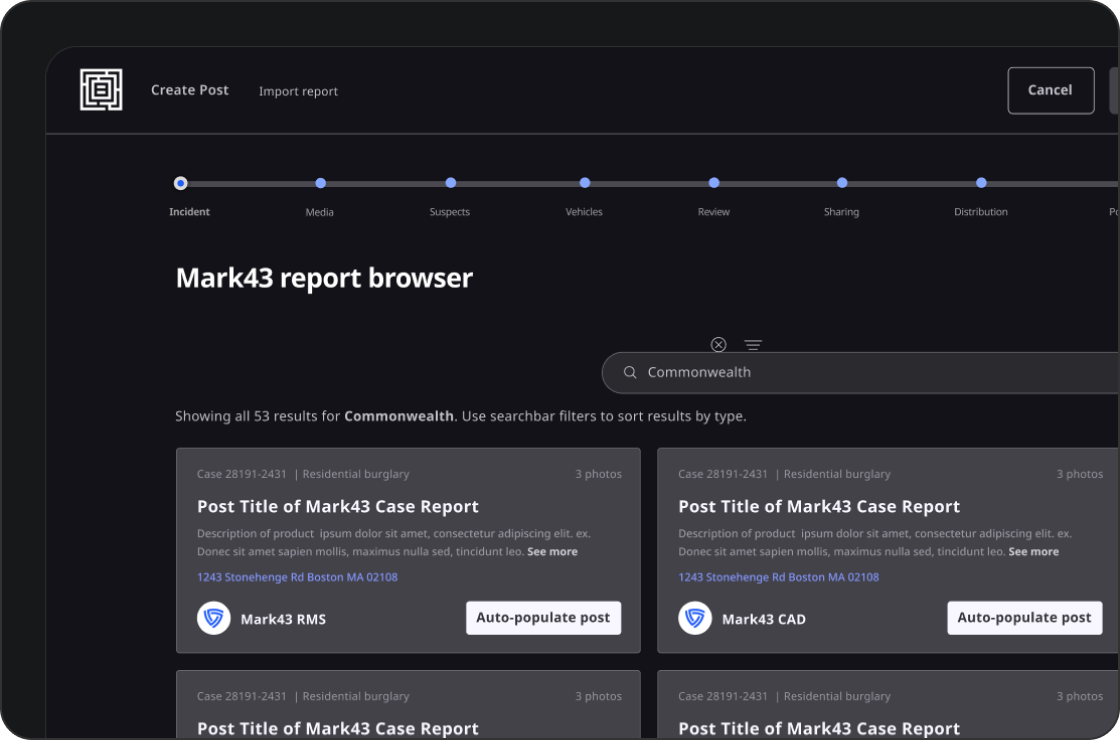
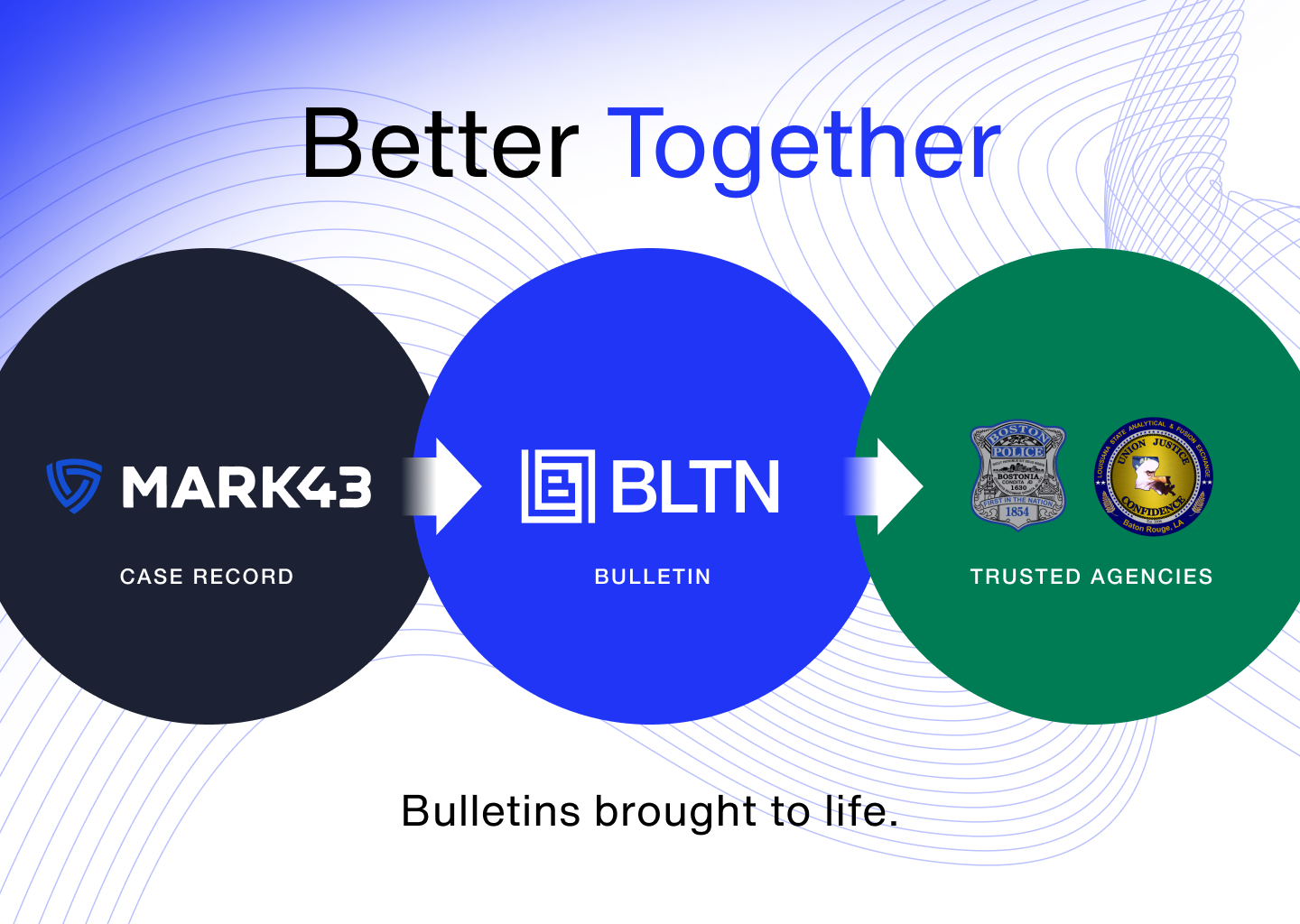
How Mark43 and BLTN help agencies like Boston PD and LA-Safe turn case information into a regional bulletin with less duplicate work.


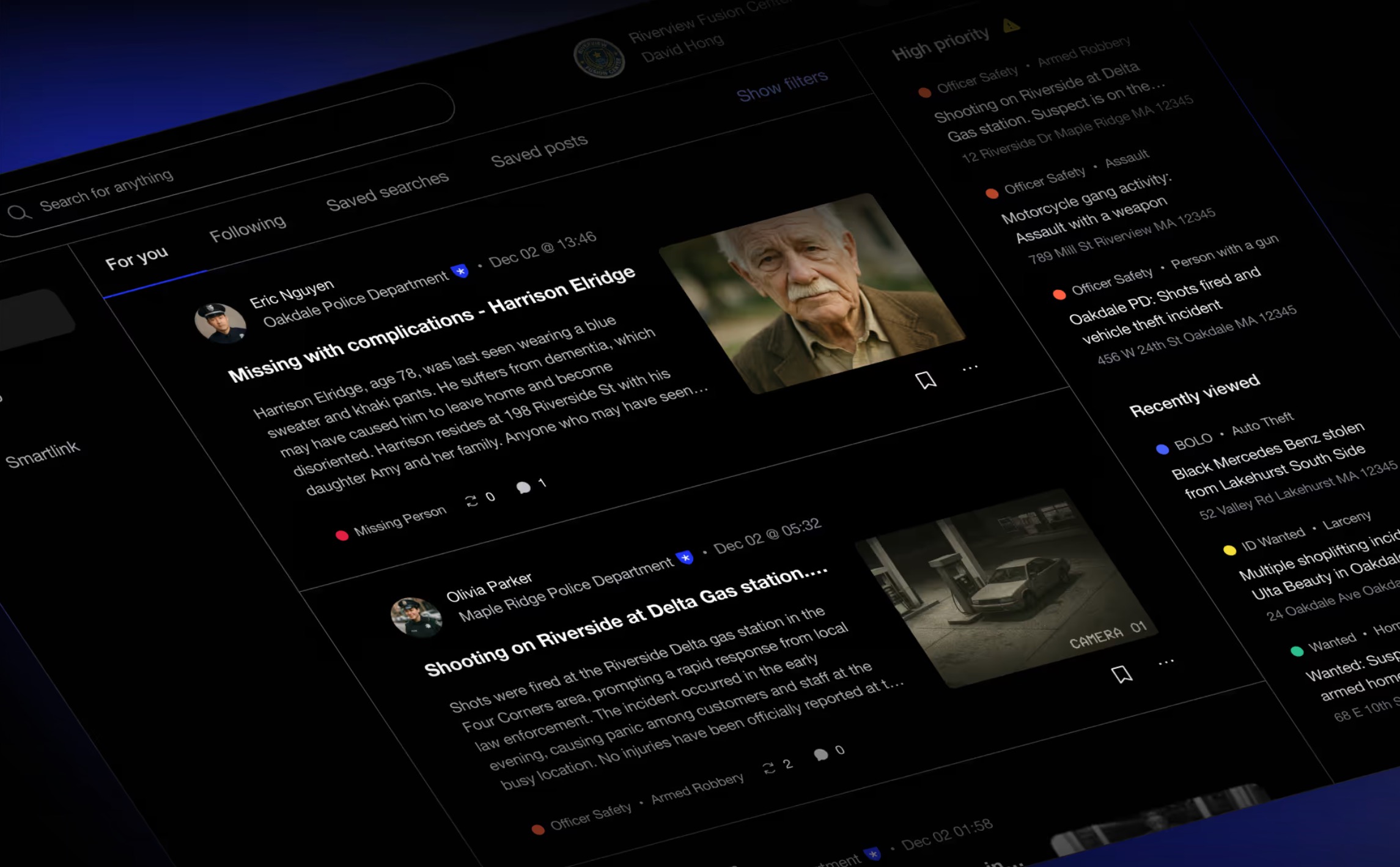
Every morning, crime analysts at law enforcement agencies across the country face the same ritual. They pull reports from their records management systems, copy information into Word documents, format tables and images, convert everything to PDF, and email these bulletins to distribution lists of officers and investigators. The recipients receive these PDFs in their already-crowded inboxes, many never opening them. Those who do often struggle to read them on mobile devices. Almost no one tracks who actually viewed the intelligence or whether it led to any investigative action.
See how BLTN modernizes this for an entire department.
This workflow, virtually unchanged for two decades, represents one of the most significant missed opportunities in modern law enforcement. Daily crime bulletins contain some of the most valuable, actionable intelligence available to patrol officers and investigators—recent crimes, emerging patterns, suspect descriptions, vehicle information, and investigative leads. Yet the antiquated delivery mechanisms ensure that much of this critical information never reaches the people who need it, or reaches them in formats so inconvenient that it gets ignored.
The digital transformation of daily crime bulletins isn't just about modernizing technology. It's about fundamentally improving how law enforcement agencies share intelligence, how officers consume that information, and how agencies measure and optimize the effectiveness of their intelligence operations. When done right, this transformation can dramatically improve case closure rates, officer safety, and the overall effectiveness of intelligence-led policing.
To understand why bulletin transformation matters, we need to understand why traditional approaches fall short. The problems begin with production. Creating daily bulletins manually is extraordinarily time-consuming. Analysts must query multiple systems for overnight crimes, extract relevant details, format everything consistently, add maps and images, ensure accuracy, obtain necessary approvals, and finally distribute the finished product. For a comprehensive bulletin covering the previous 24 hours of activity, this process can consume two to three hours of an analyst's day.
This time investment creates pressure to cut corners. When analysts are overwhelmed with other responsibilities—supporting active investigations, responding to requests from investigators, managing case loads—bulletin production becomes the task that gets shortened or skipped. Bulletins that should be daily become sporadic. Content that should be comprehensive gets abbreviated. Intelligence that should be carefully analyzed gets presented as raw data dumps.
Even when bulletins are produced consistently, distribution through email creates fundamental problems. Officers and investigators already receive dozens or hundreds of emails daily. A PDF attachment easily gets lost in the noise, deleted unread, or filed away with good intentions to review later that never materialize. Email distribution also means bulletins are tied to specific devices. An officer who checks email on a desktop computer at the start of their shift might not have access to that bulletin when they're on patrol hours later.
But perhaps the most significant failure of traditional bulletin workflows is the complete lack of engagement tracking. Once an analyst sends a bulletin via email, they have no idea who actually read it, which sections generated interest, or whether the intelligence led to any investigative action. This lack of feedback makes it impossible to improve bulletin quality or demonstrate their value to agency leadership. It also means analysts never know if the hours they invest in bulletin production are actually affecting outcomes.
The first principle of bulletin transformation is recognizing that modern law enforcement operates on mobile devices. Patrol officers carry smartphones and tablets. Investigators work from laptops and mobile workstations. Very few law enforcement professionals spend their days sitting at desktop computers in offices. Yet traditional bulletins—formatted as letter-sized PDF documents—are designed for desktop viewing.
Anyone who has tried to read a PDF on a smartphone knows the problem. The document doesn't fit the screen. Reading requires constant zooming and panning. Tables are unreadable. Images don't resize properly. The experience is so frustrating that most users simply give up, meaning critical intelligence never gets consumed.
Mobile-first bulletin design solves these problems by creating content specifically formatted for small screens. Text flows naturally without requiring horizontal scrolling. Images resize automatically. Tables transform into mobile-friendly formats. Navigation is intuitive, allowing users to quickly jump to relevant sections. The result is intelligence that officers can actually use in the field, during their shifts, whenever they need it.
This mobile optimization isn't a minor convenience—it's the difference between intelligence that gets used and intelligence that gets ignored. When bulletins are accessible and readable on mobile devices, engagement increases dramatically. Officers who would never read a PDF on their phones will spend several minutes reviewing a well-formatted mobile bulletin. That engagement translates directly into better outcomes: officers who know what crimes happened overnight, what patterns to watch for, what suspects or vehicles to be alert for, and what investigative leads their colleagues are pursuing. We're working all the time to improve this experience.
Mobile optimization is necessary but not sufficient. True bulletin transformation requires moving beyond static documents entirely, reconceiving bulletins as dynamic intelligence platforms that can be updated, enriched, and personalized in ways PDFs never could be.
Consider timing. Traditional bulletins are point-in-time snapshots. An analyst creates a bulletin covering the previous 24 hours, distributes it, and that's the end of the process. If significant intelligence emerges an hour later—a major arrest, a critical pattern identification, an urgent officer safety alert—it must wait for tomorrow's bulletin or be sent as a separate communication that may or may not reach the right people.
Dynamic bulletin platforms allow real-time updates. When critical intelligence emerges, analysts can update the current bulletin immediately. Officers who have the platform installed receive notifications about the update. Intelligence reaches the people who need it within minutes rather than waiting for the next production cycle. This capability is particularly valuable for time-sensitive information like suspect sightings, vehicle alerts, or officer safety warnings.
Dynamic platforms also enable personalization in ways static documents cannot. Different roles within an agency need different intelligence. Patrol officers need broad situational awareness about recent crimes and patterns in their districts. Detectives need detailed information about cases related to their investigations. Supervisors need strategic overviews of crime trends and resource allocation. Task force members need intelligence relevant to their specific focus areas.
Traditional bulletins attempt to serve all these audiences with a single document, inevitably providing too much irrelevant information to some readers and too little relevant detail to others. Dynamic platforms can customize content based on role, assignment, geographic responsibility, or individual preferences. Officers see intelligence relevant to their districts and responsibilities. Detectives can filter for information related to their active cases. Everyone gets the intelligence they need without being overwhelmed by information they don't. This future is coming, and much of it is already here with BLTN.
Perhaps the most transformative aspect of digital bulletin platforms is the ability to measure engagement and use that data to continuously improve intelligence operations. When bulletins move from PDF emails to platforms designed for tracking, agencies gain unprecedented visibility into how their information is actually being used.
Engagement metrics reveal which officers and investigators actually view bulletins, how long they spend with each section, which types of intelligence generate the most attention, and which portions get skipped. This data is extraordinarily valuable for optimizing bulletin production.
For example, an agency might discover that their carefully prepared crime statistics tables get very little engagement while suspect photos and vehicle descriptions generate significant attention. This feedback allows analysts to restructure their products, emphasizing the content that officers actually find valuable while streamlining or eliminating sections that don't get used. The result is bulletins that are both more useful and faster to produce.
Engagement tracking also enables accountability and quality control. Supervisors can monitor whether their personnel are actually consuming intelligence. Agencies can identify gaps in distribution—groups of officers who should receive bulletins but aren't viewing them, suggesting they may not be properly included in distribution or may need different delivery mechanisms. Command staff can demonstrate to elected officials and community stakeholders that intelligence operations are producing measurable engagement, not just consuming resources.
Perhaps most valuably, engagement data can be correlated with outcomes. When cases get solved, agencies can examine whether the relevant intelligence was included in bulletins and whether the investigators who solved the case had viewed that intelligence. When patterns are identified and disrupted, agencies can assess whether bulletin distribution of that pattern information contributed to the outcome. Over time, this correlation allows agencies to identify which types of bulletin intelligence produce the best investigative results, enabling continuous refinement of both content and presentation.
Traditional bulletins are dead ends. An officer reads about a crime or pattern, and if they want to take action, they must manually search for related cases in their records management system, contact the analyst for more information, or reach out to investigators in other jurisdictions. These friction points mean that intelligence that could generate investigative action often doesn't because the path from bulletin to investigation is too cumbersome.
Modern bulletin platforms integrate directly with investigative workflows. When an officer reads about a crime pattern, they can immediately see related cases, access full case details, identify relevant evidence, and connect with investigators working the pattern—all within the same platform. This seamless integration dramatically increases the likelihood that bulletin intelligence will translate into investigative action.
Consider a patrol officer who reads a bulletin describing a series of vehicle thefts with similar modus operandi. In a traditional workflow, if that officer later encounters a suspicious person near a parked vehicle, they might recall the bulletin but have no easy way to determine whether this incident fits the pattern. In an integrated platform, the officer can quickly pull up the bulletin on their mobile device, review the pattern details, and immediately notify investigators if the situation appears related.
This integration works in both directions. When investigators are working a case, they can check whether related intelligence has been distributed in bulletins, see which officers viewed that intelligence, and reach out to personnel who might have additional information. This bidirectional flow ensures that bulletin intelligence actually feeds into investigations rather than existing in isolation.
One of the primary barriers to consistent, high-quality bulletin production is the manual labor involved. Digital bulletin platforms address this through intelligent automation that handles repetitive tasks while preserving the analytical judgment that makes bulletins valuable.
Automation can handle data aggregation—pulling overnight crimes from records management systems, organizing them by type and geography, identifying potential patterns based on modus operandi or other factors. It can handle formatting—ensuring consistent presentation, appropriate use of maps and images, proper organization of content. It can handle distribution—pushing bulletins to appropriate personnel based on their roles and responsibilities rather than requiring analysts to manage email lists.
What automation cannot and should not handle is the analytical judgment that determines which information is intelligence-worthy, how that information should be contextualized, and what recommendations or actions it suggests. This is where human analysts remain essential. The goal of automation is to free analysts from repetitive technical tasks so they can focus on the analytical work that actually generates value—identifying significant patterns, providing context that helps officers understand why information matters, and offering recommendations that guide investigative action.
Platforms like BLTN exemplify this balance. The platform automates the technical aspects of bulletin production—data gathering, formatting, distribution, engagement tracking. But it preserves and enhances the analyst's role in determining what information should be highlighted, how it should be explained, and what action it suggests. The result is bulletins that are faster to produce without sacrificing the analytical quality that makes them valuable.
Law enforcement agencies operate under tight budget constraints. Investing in new technology requires demonstrating clear return on investment. Digital bulletin platforms offer several measurable benefits that justify their cost.
First, they save analyst time. When bulletin production that previously required two to three hours daily can be accomplished in thirty to forty-five minutes, agencies free up hundreds of analyst hours annually. Those hours can be redirected to supporting active investigations, conducting deep analytical projects, or expanding intelligence operations that were previously impossible due to resource constraints.
Second, they improve case closure rates. When intelligence reaches officers and investigators more effectively, when it's presented in formats they actually use, and when it integrates with investigative workflows, cases get solved faster. Multiple agencies using modern bulletin platforms report case closure rate improvements of 15 to 30 percent for crime types where cross-jurisdictional information sharing is critical—burglaries, vehicle thefts, commercial robberies, and similar offenses.
Third, they enhance officer safety. When officers have better situational awareness about suspects, vehicles, and patterns in their areas, they approach situations with appropriate caution and preparation. While officer safety benefits are harder to quantify than case closures, agencies consistently report that improved intelligence distribution through modern bulletin platforms has contributed to officers identifying dangerous situations they might otherwise have encountered unprepared.
Fourth, they enable agencies to demonstrate intelligence value to stakeholders. When agencies can show concrete engagement metrics—how many personnel view bulletins, how long they spend with intelligence content, which information generates the most attention—they can justify continued investment in intelligence operations. When they can correlate bulletin intelligence with investigative outcomes, they can demonstrate return on investment in terms that resonate with elected officials and budget authorities.
Technology alone doesn't transform bulletin operations. Successful digital transformation requires cultural change—shifting how agencies think about intelligence sharing, how analysts approach their work, and how officers and investigators consume and act on intelligence.
This cultural shift begins with leadership commitment. When command staff emphasize the importance of intelligence consumption, when they hold personnel accountable for engaging with bulletins, when they celebrate investigative successes that resulted from bulletin intelligence, they create organizational cultures that value information sharing. Conversely, when leadership treats bulletins as administrative requirements rather than operational necessities, personnel follow that lead.
The shift also requires training that goes beyond technical instruction on how to use new platforms. Officers and investigators need to understand how to translate bulletin intelligence into action. Analysts need to learn how to interpret engagement data and use it to improve their products. Supervisors need to understand how to use engagement metrics to ensure their personnel are consuming intelligence and to identify gaps in distribution or comprehension.
Perhaps most importantly, the cultural shift requires agencies to move from treating intelligence as a specialized function performed by dedicated analysts to treating it as a shared responsibility where everyone contributes. When patrol officers report patterns they observe in the field, when investigators share intelligence from their cases, when supervisors provide feedback on what intelligence proves most valuable, agencies create intelligence operations that are richer, more comprehensive, and more directly tied to operational needs.
Daily crime bulletins have been part of law enforcement for decades. But for too long, they've been produced using workflows designed for an era when officers worked from desktop computers, when email was the primary communication tool, and when measuring engagement was impossible. The digital transformation of bulletins isn't about abandoning this proven intelligence tool—it's about bringing it into alignment with how law enforcement actually operates in the twenty-first century.
Modern bulletin platforms (like BLTN)—mobile-optimized, dynamically updated, integrated with investigative workflows, tracked for engagement—represent a fundamental improvement over PDF emails. They ensure intelligence reaches the people who need it in formats they'll actually use. They enable analysts to produce better bulletins in less time. They provide agencies with data to measure and improve intelligence operations. And they translate all of these improvements into better outcomes: cases solved, patterns disrupted, officers kept safe.
The technology for this transformation exists today. Platforms like BLTN demonstrate that agencies can modernize their bulletin operations without massive technology investments or lengthy implementation processes. The question is whether agencies will recognize that the gap between their traditional bulletin workflows and what's now possible represents not just an inconvenience but a significant missed opportunity to improve public safety.
The agencies that embrace bulletin transformation will gain competitive advantages in their ability to share intelligence, solve cases, and keep personnel safe. More importantly, they'll demonstrate to their communities and their personnel that they're willing to adopt modern approaches to information sharing—that they recognize intelligence operations are too important to be constrained by outdated workflows and tools designed for a different era.


.png)